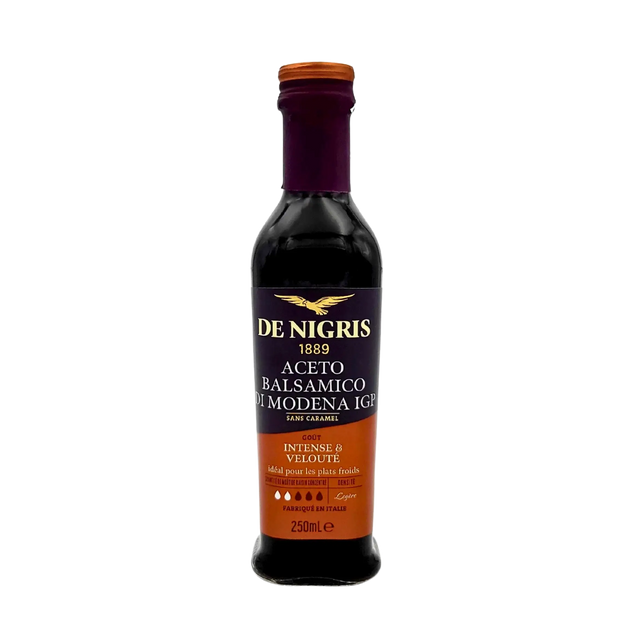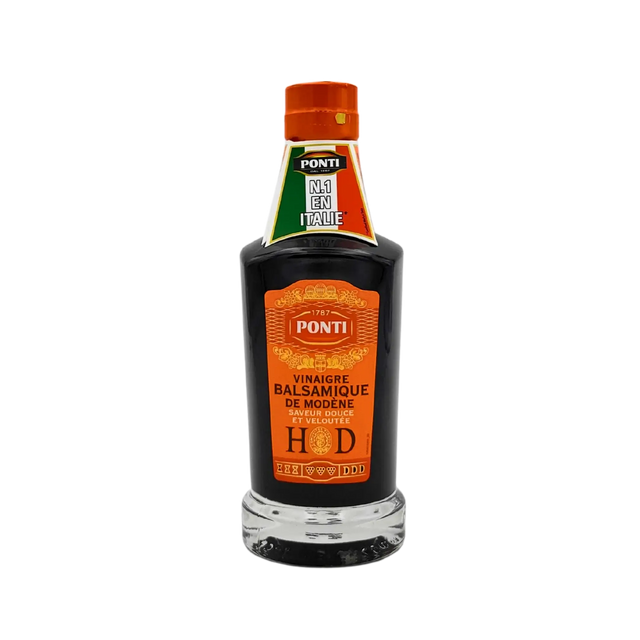
Balsamic Vinegar: History, Flavors, and Benefits for Your Health
See the products in this article
Balsamic vinegar is not just an Italian condiment: it is a liquid heritage, a dark elixir that concentrates centuries of craftsmanship. Through this sensory guide, discover how this velvety nectar tells a story — and why its deep aromas deserve a prominent place in your daily life.
The Origins: The Birth of a Black Elixir
Born in Emilia-Romagna, balsamic vinegar has traversed the centuries like a family treasure. It can be found in attics where rows of oak, cherry, or juniper barrels stand, each adding a subtle note to its slow maturation. This passage of time gives it its deep brown color and the aromatic depth that connoisseurs recognize among thousands.
✨ Why is it unique?
- Ancestral transmission in Emilia-Romagna
- Maturation in various wooden barrels providing a woody bouquet
- Natural evolution of concentrated grape must
Sensory Profile: What Makes Balsamic Unique
Its syrupy texture glides smoothly over the tongue, releasing a sweet-sour taste punctuated with caramelized touches. Notes of fig, plum, or ripe fruits emerge, while a warm scent of heated wood envelops the nose. The balance between natural sweetness and a slightly tangy finish makes it an emotional condiment as much as a gastronomic one.
✨ Why is it unique?
- Coating texture revealing a controlled aging
- Complex aromas blending ripe fruits, wood, and natural caramel
- Mahogany color indicating a slow reduction of the must
Its Natural Benefits According to Science
Its richness in polyphenols gives it recognized antioxidant properties. It can contribute to better regulation of blood sugar, a quicker feeling of satiety, and moderate support for the cardiovascular system. Without excessive promises, it is mainly noted for its role as a companion to metabolism thanks to its delicate acidity and organic compounds.
✨ Why is it unique?
- Polyphenols naturally present in grape must
- Mild acidity that supports digestion and satiety
- Stable nutritional profile thanks to long fermentation
How to Enjoy It Daily
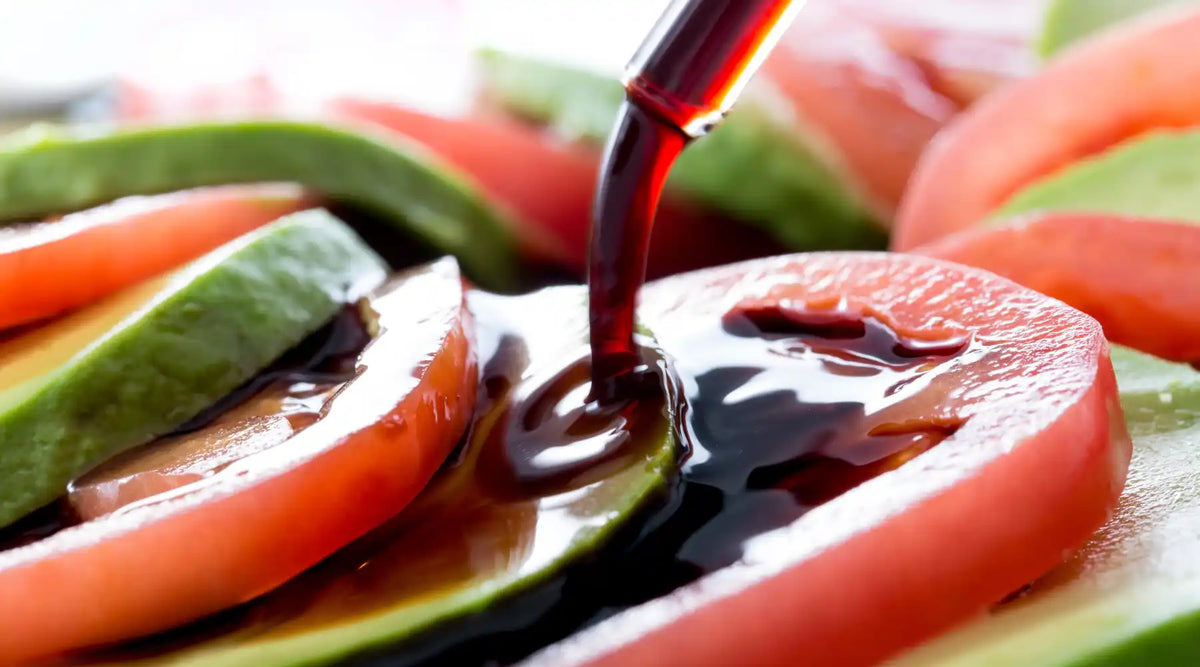
Balsamic excels when it creates a contrast: sweetness against crunchiness, acidity against roundness, warm aroma against freshness. Used as a finishing touch, it enhances the already present aromas without ever masking them. Its favored pairings — red fruits, aged cheeses, grilled vegetables — allow for the exploration of its entire palette of nuances.
✨ Why is it unique?
- A condiment that accompanies, never dominates
- Varied aromatic pairings thanks to its tangy sweetness
- An intensity that evolves with its age
How to Choose a Good Balsamic
Natural viscosity is a first indicator: a velvety texture often signals patient maturation. Traditional mentions, such as age or type of wood differentiations, enlighten the consumer about the aromatic depth. A young balsamic will be lively and spicier, while an aged balsamic will offer a softer and more complex finish.
✨ Why is it unique?
- Mention of the type of aging (young vs aged)
- Direct influence of wood essences on the final aroma
- Absence of additives revealing an authentic product
🙋♂️ Frequently Asked Questions
- Why are some balsamics thicker? Because they have aged longer, thus concentrating the aromas and texture.
- Is dark color a sign of quality? Yes, when this mahogany hue comes naturally from the reduction of the must and not from additives.
- Should it be stored in the refrigerator? No, its natural concentration allows it to remain stable at room temperature.
Italy invites itself into your home... explore our selection just below 👇
Products in this article