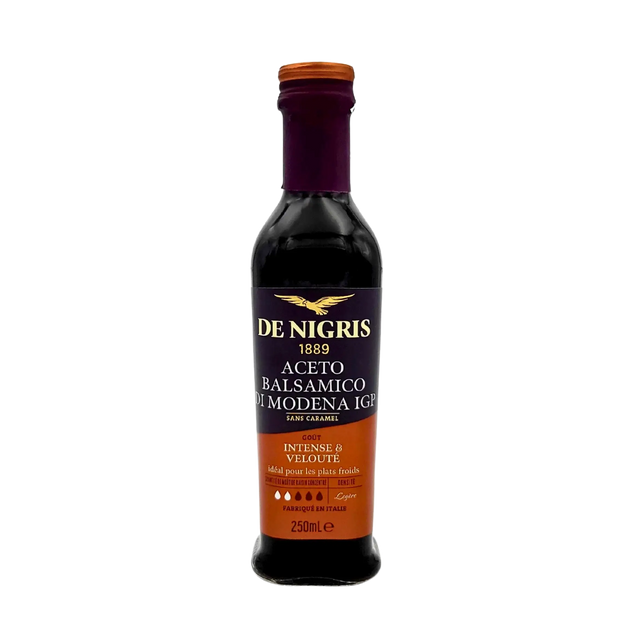
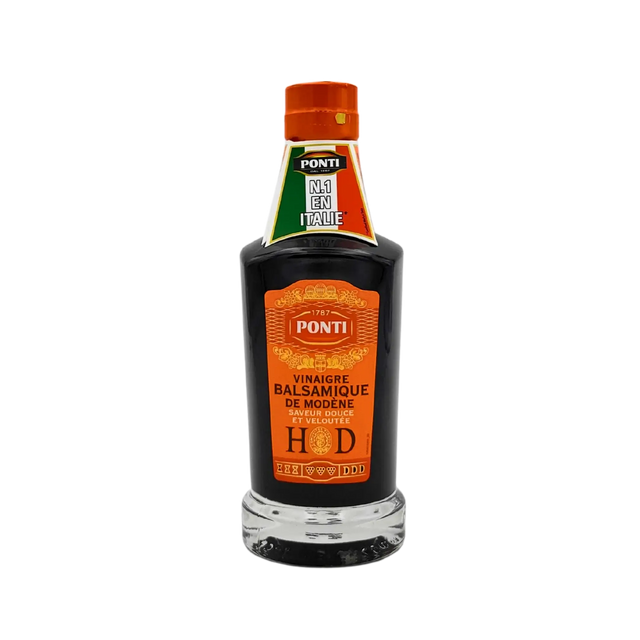
The different types of balsamic vinegar: tasting guide through Italy
See the products in this article
Diving into the world of balsamic vinegar is to enter an Italian tradition where time, wood, and must create a liquid heritage. Here is a tasting guide designed to reveal the personalities, textures, and aromas that give each balsamic its soul.
At the Origins of Balsamic: The Soul of Modena
Born in the heart of Modena, balsamic is passed down as a heritage. The rows of barrels slowly shape its notes of candied must, its woody aromas, and that almost velvety dark depth that makes it famous. With each opening of a barrel, it is a breath of history, an echo of the passing time.
✨ Why is it unique?
- Aging in successive barrels that enriches the aromatic palette.
- A historical terroir where climate and grapes dictate the identity of the product.
- A naturally syrupy texture that marks mature balsamics.
🙋♂️ Frequently Asked Questions
Why is its color so dark?
The slow reduction of the must and prolonged contact with the woods gradually darken the liquid.
Is a very dense balsamic necessarily better?
It is often richer and more complex, but it all depends on the desired taste profile.
The Major Families of Balsamic: Understanding Their Identities
Each type of balsamic tells a different personality. AOP balsamic, with its almost honey-like density and caressing acidity, offers a remarkable length on the palate. IGP offers a more accessible and bright tanginess, while white balsamic reveals a crystalline clarity and fruity freshness ideal for lighter blends.
✨ Why is it unique?
- Strict designations that preserve the identity of each category.
- Aromatic nuances ranging from controlled sweetness to warm finishes.
- A diversity allowing for limitless sensory exploration.
🙋♂️ Frequently Asked Questions
Is white balsamic a real balsamic?
Yes, it follows the same logic of must but offers a brighter and more delicate profile.
Why is AOP considered the most prestigious?
Its long and regulated aging gives it an incomparable depth and lasting aroma.
How to Taste Balsamic: The Sensory Approach
Observe the ruby brilliance, capture the woody and fruity notes, then feel the lively attack followed by a warm finish: each balsamic is savored as a multisensory experience. Its balance between sweetness and acidity makes it a tasting companion as intriguing as it is refined.
✨ Why is it unique?
- An alchemy of natural sugars, bright acidity, and long maturation.
- An aromatic signature shaped by decades of patience.
- A palette of textures ranging from fresh fluidity to syrupy density.
🙋♂️ Frequently Asked Questions
How to recognize a quality balsamic?
The coherence between density, brightness, and aromatic balance is a good indicator.
Does aging really change the taste?
Completely: the longer the time acts, the more concentrated the texture becomes and the deeper the aroma gains in depth.
Let your senses travel… then explore the treasures we have prepared just below 👇
Products in this article